

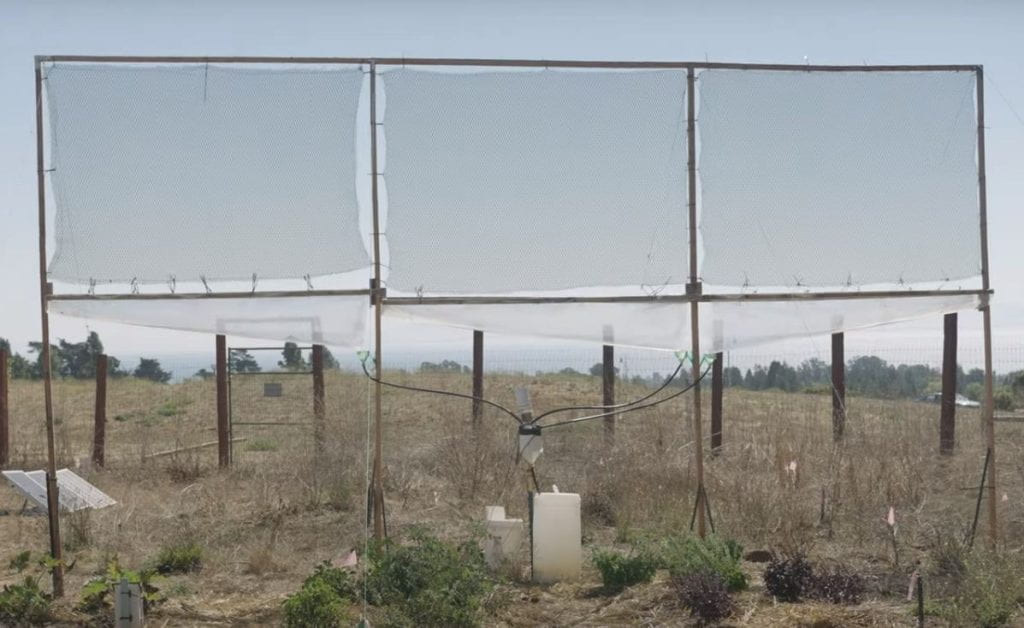
In cities where water is expensive or unreliable, urban farmers need smart alternatives. What if you could harvest water directly from the air? At Vegglo, we explore every sustainable option. In this post, we introduce two innovative methods—fog catchers and dew harvesting—to help you collect free water and keep your garden green all year.
💨 What is a Fog Catcher?
A fog catcher is a simple device made of mesh that captures water droplets from misty air. As fog passes through the net, tiny water particles stick, combine, and drip into a container below. This method has been used in dry, coastal areas like Chile and Morocco—and now, small-scale versions are being tested in parts of Kenya too.
Perfect for:
- Early morning mist zones (Ngong Hills, Limuru, parts of Kisii)
- Rooftops and balconies with open airflow
- Raised garden setups in foggy weather

🛠️ How to Make a DIY Fog Catcher
Materials Needed:
- 1 meter x 1 meter shade net (50–70% density works best)
- 4 wooden or metal poles
- Plastic gutter or trough to collect water
- 20L jerrycan or container
- Ropes, zip ties, or nails
Setup:
- Stretch the net vertically between two poles to form a “wall”
- Place a gutter or basin at the bottom to catch water drips
- Secure the gutter so it drains into your jerrycan
- Place your setup in an open area that catches morning fog or wind
One square meter of fog net can collect up to 1–3 liters per day in the right conditions.
💧 Dew Harvesting – Collecting Night Moisture
Dew forms when humid air condenses on cool surfaces at night. You can harness this natural water by placing smooth, cool materials outdoors overnight to capture water droplets.
Materials for Dew Collection:
- Smooth plastic sheets or metal surfaces (like iron sheets)
- Glass panes or old windows (very effective)
- Slanted setup with gutter or collection tray
How to Harvest Dew:
- Lay the sheet or glass at an angle, facing open sky
- Place a container underneath to collect run-off water
- Collect the water in the morning before sunrise
✅ Tips to Maximize Air-Water Harvesting
- Position your fog net or dew surface facing wind or open space
- Use dark-colored plastic for faster nighttime cooling (for dew)
- Clean surfaces regularly to avoid dust buildup
- Store collected water in a sealed container to avoid contamination
🌱 How to Use the Water
Fog and dew water is clean and chemical-free, though slightly acidic. It’s safe for watering:
- Spinach, sukuma, and leafy greens
- Seedlings or nursery trays
- Herbs like mint, basil, and coriander
Use directly on soil or mix into your compost tea for extra nutrients.
🧠 Creative Urban Adaptations
Even if you live in a flat or dry area, you can experiment:
- Install dew-collecting trays on your window grills
- Use old CD cases or transparent roofing to trap moisture
- Paint surfaces black to cool faster and attract condensation
Harvest the Sky, Nourish the Soil 🌫️
Water doesn’t have to come from a tap. With fog catchers and dew traps, even the air can feed your farm. It’s low-cost, sustainable, and perfect for balcony or rooftop gardeners who want to save water and grow smarter.
Start with one net or one tray—track your results, adjust, and expand. Let your garden drink from the clouds, with Vegglo.
💌 Want more urban farming tips from Vegglo? follow us for weekly growing guides, plant hacks, and small-space ideas.